Denture Adhesive: How to Use It and When It Signals a Fit Problem
How denture adhesive works, how much to use, what to know about zinc, and the signs your denture needs relining or replacing.
Edited and fact-checked by our editorial team.

Denture adhesive is a paste, powder, pad or strip that helps hold dentures in place, but well-fitting dentures often need little or none, and it is not a fix for dentures that have become loose.
If you wear full or partial dentures, you have probably seen shelves of fixatives at the pharmacy or supermarket. Used sensibly, they can add a bit of confidence. Used heavily to prop up a denture that no longer fits, they can hide a problem your dentist should be looking at. This guide covers what adhesives do, how to use them, the zinc question, and the signs your denture needs attention.
What does denture adhesive actually do?
The American Dental Association (ADA) describes adhesives as creams, powders, wafers or strips that hold dentures firmly in place and help seal out food particles. The US Food and Drug Administration (FDA) adds that they fill gaps caused by shrinking bone and give temporary relief when dentures start to loosen.
Two points from those sources are worth keeping in mind:
- For a well-fitting denture, a thin film of saliva is often enough to hold it in place. Adhesive can add extra retention, but it is not essential.
- The FDA states that properly fitted and maintained dentures should not normally need adhesive. When dentures loosen over time, the usual answer is a reline or a new denture.
Who might find an adhesive useful?
According to the ADA, adhesives may help people with a dry mouth (xerostomia), where there is less saliva to help the denture stay put. The Illinois Department of Public Health notes that adhesive may help when the bone supporting the denture shrinks and the denture becomes loose, and it recommends asking your dentist to check the fit because gums change over time.
How to apply denture adhesive
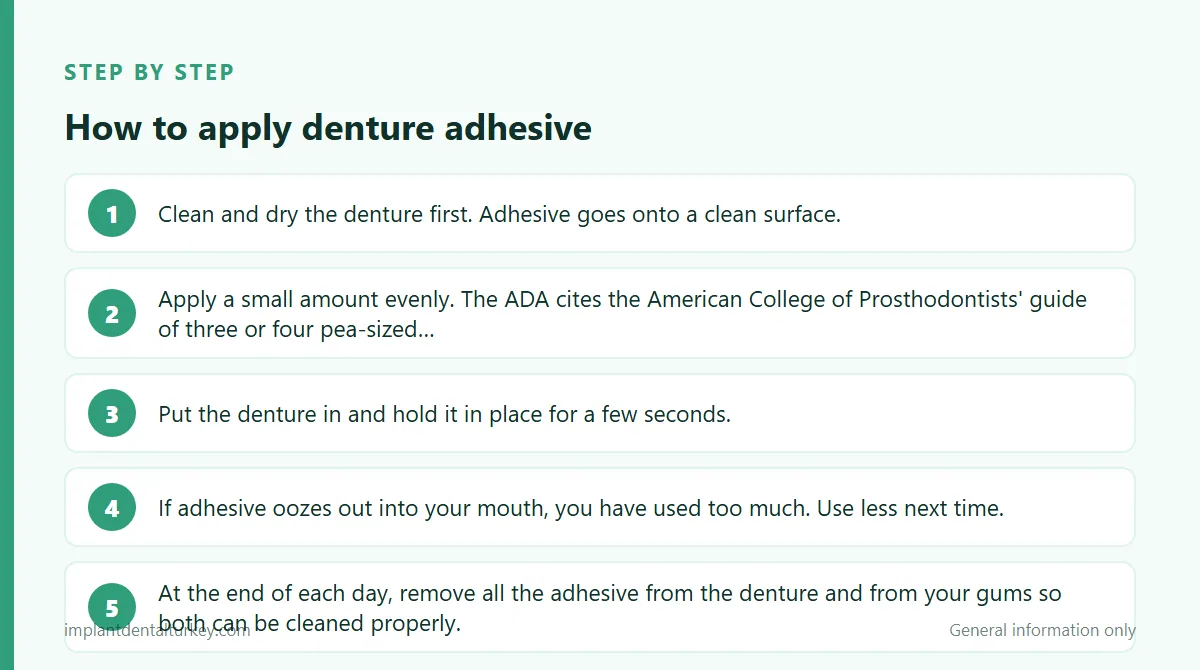
Always start with the product’s own instructions. If they are unclear or missing, the FDA and ADA both suggest asking a dental professional. The general steps they describe are:
- Clean and dry the denture first. Adhesive goes onto a clean surface.
- Apply a small amount evenly. The ADA cites the American College of Prosthodontists’ guide of three or four pea-sized dabs per denture.
- Put the denture in and hold it in place for a few seconds.
- If adhesive oozes out into your mouth, you have used too much. Use less next time.
- At the end of each day, remove all the adhesive from the denture and from your gums so both can be cleaned properly.
How much is too much?
The FDA gives a practical benchmark: a 2.4-ounce (about 68 g) tube used by someone with upper and lower dentures should last around seven to eight weeks. It suggests writing on a calendar the day you open a new tube and the day it runs out. If tubes are disappearing much faster than that, it is a sign to stop and get the fit checked rather than add more.
Is the zinc in some adhesives a concern?
Some adhesives contain zinc to improve grip. The FDA explains that excess zinc in the body can, over time, damage nerves, especially in the hands and feet. Case reports linked numbness and tingling to people using at least two tubes a week, sometimes alongside zinc supplements. The FDA also says it has not found conclusive evidence that these problems occur when products are used as labelled.
Practical steps from the FDA and ADA:
- Check the packaging for zinc. Zinc-free products are available, and the ADA reports that the American College of Prosthodontists recommends avoiding zinc-containing adhesives as a precaution.
- Be aware that not every product lists all its ingredients, according to the FDA.
- If you take zinc supplements, mention your adhesive use to your doctor or pharmacist.
- If you notice numbness or tingling in your hands or feet, stop using the adhesive and see your doctor.
When adhesive is a sign your denture needs attention
Gums and jawbone change over time, so a denture that fitted well when it was made can slowly loosen. The NHS lists these reasons to see a dentist:
- dentures that click when you talk
- dentures that slip or no longer fit well
- pain or sore spots
- worn or damaged dentures (take any broken pieces with you)
- very red or bleeding gums, or bad breath
The ADA adds red flags from the American College of Prosthodontists: needing adhesive to eat or to keep the denture in place socially, or needing it more than once a day, suggests the denture should be assessed for replacement. Long-term use of a poorly fitting denture can cause mouth sores and may increase bone loss, the ADA and FDA note, so heavier adhesive use can make the underlying problem worse over time.
If you are weighing up a new denture against other options, our article on false teeth or dental implants sets out the trade-offs.
Cleaning dentures when you use adhesive
Adhesive left on a denture traps food and bacteria. The ADA recommends removing adhesive and loose food before cleaning, then brushing the denture gently with a soft brush and a non-abrasive cleanser. The NHS suggests soft soap or washing-up liquid rather than toothpaste, and cleaning over a bowl of water or a towel so the denture does not break if dropped. Avoid hot or boiling water and household bleach, which can warp or damage dentures.
The NHS also advises taking dentures out at night and storing them in water or a cleaning solution, unless your dentist has told you otherwise. Keep brushing your gums, tongue and any natural teeth twice a day.
Help with denture costs in New Zealand
Work and Income’s dental treatment grant of up to $1,000 in a 52-week period covers immediate and essential treatment, but its page states that dentures are not included. Instead, it says dentures may be supported through other options such as recoverable assistance or an advance payment of benefit, subject to eligibility. Check the current rules directly with Work and Income.
Frequently asked questions
Should I use denture adhesive every day?
Some people do so comfortably with a small amount. Needing it more than once a day, or needing it simply to eat, is a sign the fit should be checked by your dentist.
Can denture adhesive fix a loose denture?
No. The FDA says a large amount of adhesive will not fix an ill-fitting denture. A reline or replacement is the usual solution.
How do I get adhesive off my gums?
Remove all adhesive from your mouth and denture at the end of each day, as the FDA and ADA advise. Rinsing and gently wiping or brushing your gums helps.
Do I still need dental check-ups if I have no natural teeth?
Yes. Regular exams let your dentist check your gums, the fit of your denture and the soft tissues of your mouth.
Sources
- U.S. Food and Drug Administration, Denture Adhesives
- American Dental Association, Denture Care and Maintenance
- Illinois Department of Public Health, Denture Adhesives
- NHS, Dentures (false teeth)
- Work and Income, Dental treatment
This article is general information and does not replace advice from your own dentist.