Tooth Bridge Cost in NZ: What You’re Paying For
Bridge types, cost drivers and funding rules for New Zealanders.
Edited and fact-checked by our editorial team.

Tooth bridge cost in NZ isn’t fixed: Health NZ says there’s no set fee structure for private dentists, so prices vary by practice and bridge type. Most adults pay privately, and Work and Income’s dental grant excludes cast restorations. Get itemised quotes.
Because there’s no national price list, the useful question is less “what does a bridge cost?” and more “what am I paying for, and how does it compare over time?” This guide breaks down the cost drivers and the funding rules in New Zealand.
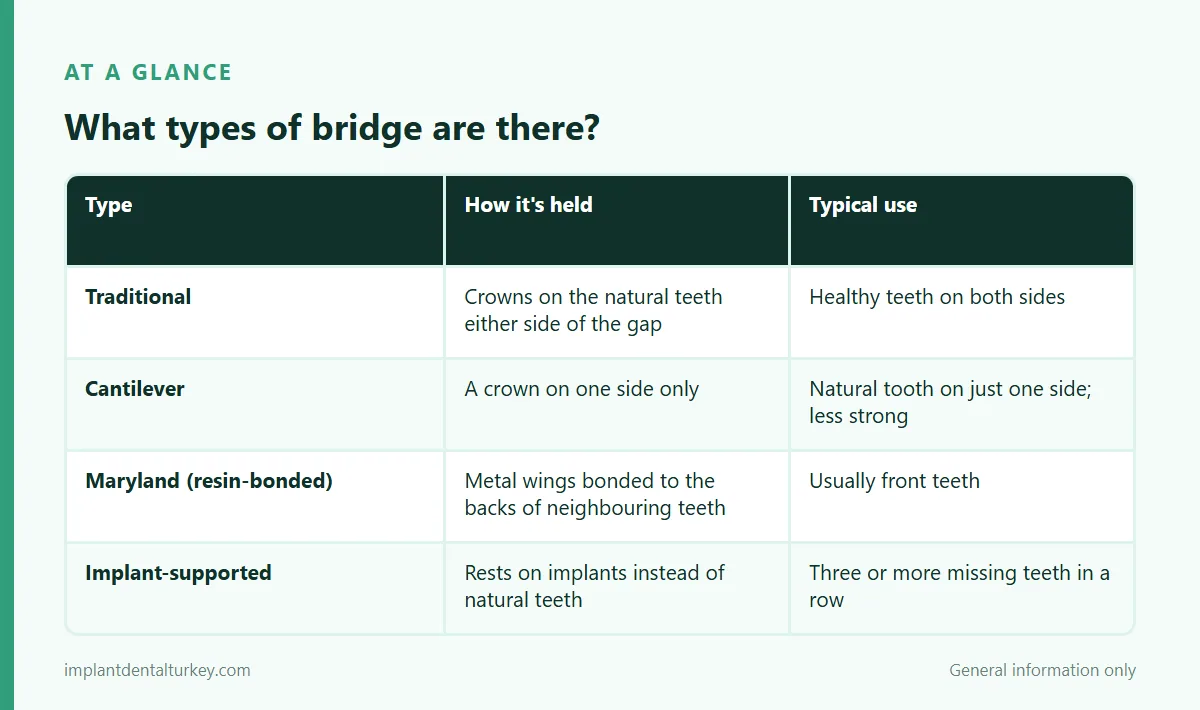
What types of bridge are there?
| Type | How it’s held | Typical use |
|---|---|---|
| Traditional | Crowns on the natural teeth either side of the gap | Healthy teeth on both sides |
| Cantilever | A crown on one side only | Natural tooth on just one side; less strong |
| Maryland (resin-bonded) | Metal wings bonded to the backs of neighbouring teeth | Usually front teeth |
| Implant-supported | Rests on implants instead of natural teeth | Three or more missing teeth in a row |
All four are described by Cleveland Clinic, which adds that most bridges replace one to three teeth in a row.
What affects the cost of a bridge?
- Number of units: Cleveland Clinic explains that impressions are sent to a lab to make the bridge, so more units generally means more lab work to pay for.
- Type: an implant-supported bridge includes the implants themselves. Cleveland Clinic says bridges are more affordable than implants.
- Preparing the supporting teeth: for a traditional bridge, Cleveland Clinic says the neighbouring teeth are reshaped and some enamel is removed permanently.
- Visits: impressions, a temporary bridge for two to four weeks while the final one is made, and a fitting visit.
- The practice: Health NZ says fees depend on location, whether it’s a specialist or general practice, and whether advanced equipment or techniques are used.
How long does a bridge last?
Cleveland Clinic gives an average lifespan of five to 15 years, sometimes longer with good care. By comparison, it says implants generally last longer than bridges and help preserve jawbone. When comparing quotes, think about cost per year rather than the upfront figure alone. Our comparison of implants vs bridges in New Zealand goes into this trade-off.
Is there any funding for a bridge in NZ?
- Work and Income: provides up to $1,000 (Work and Income, checked October 2026) in a 52-week period for immediate and essential dental treatment for eligible people, but its page lists cast restorations among exclusions. Ask Work and Income or your dentist whether your bridge would fall into that category before assuming it’s covered.
- ACC: Health NZ says if you need dental treatment because of an accident or injury, ACC will cover it, though you may still pay part of the cost.
- Under 18s: dental care is publicly funded for eligible young people until their 18th birthday. Cleveland Clinic notes dentists usually don’t place bridges in people under 17 or 18.
- Insurance: check your policy; our guide to what dental insurance covers in NZ can help.
How to compare bridge quotes
- Ask for the bridge type and the number of units in writing.
- Check whether the temporary bridge and follow-up visits are included.
- Ask about the materials and where the bridge is made.
- Ask what happens if a supporting tooth develops decay; Cleveland Clinic notes decay or trauma to these teeth can weaken a bridge.
Keeping your bridge lasting longer
Cleveland Clinic recommends brushing and flossing daily with a non-abrasive fluoride toothpaste, cleaning under the bridge every day with floss threaders or interproximal brushes, avoiding very hard or chewy foods, and keeping regular check-ups.
Sources
- Cleveland Clinic, Dental Bridges
- Health NZ, Dental care
- Work and Income, Dental treatment
- Cleveland Clinic, Dental Implants
This article is general information and is not a substitute for advice from your own dentist.