Dental Implant Aftercare: First Week and Beyond
What to eat, what is normal, warning signs and long-term cleaning around implants.
Edited and fact-checked by our editorial team.

Good dental implant aftercare has two phases: the first week or two after surgery, when soft foods, gentle cleaning and watching for warning signs matter most, and the years that follow, when daily cleaning around the implant and regular check-ups protect the gum and bone holding it in place.
Your own surgeon’s written instructions always come first, because they reflect exactly what was done, whether that included an extraction, a bone graft or a temporary tooth. What follows is a practical framework for the questions most people have once they are home from the clinic, drawn from Cleveland Clinic and UK clinical guidance.
What is normal in the first week after implant surgery?
Cleveland Clinic says slight discomfort and swelling for about a week is expected after implant placement, and over-the-counter pain relief can help. Plan for a quieter few days, particularly if you had several implants placed or sedation.
What should you eat after implant surgery?
Cleveland Clinic’s general advice after oral surgery, which it says applies to dental implants among other procedures, is to wait until the local anaesthetic has worn off before eating so you do not bite a numb tongue or cheek. After that:
- Start with soft foods that are cold or at room temperature, such as yoghurt, smoothies, scrambled eggs, mashed potato, cooked pasta, rice or banana.
- Let hot drinks and soup cool to lukewarm. Very hot food can disturb the blood clot.
- Avoid hard and crunchy foods such as nuts, chips and crackers, plus spicy and acidic foods like hot sauce, citrus juice and vinegar.
- Skip straws. Cleveland Clinic warns that suction can dislodge the clot.
- Eat soft foods for two to three days, then add more solid foods gradually without overdoing it.
Your surgeon may ask you to avoid chewing directly on the implant site for longer, especially before the final crown is fitted.
Which warning signs mean you should call your dentist?
Cleveland Clinic lists the following as reasons to contact your dentist after implant treatment:
- An implant that feels loose
- Bleeding gums
- Swollen gums around the implant
- Pus
- Fever
- Swollen lymph nodes in the neck
If you had treatment away from your usual dentist, keep the clinic’s contact details and your treatment records handy so whoever sees you knows what was placed.
How do you clean around an implant long term?
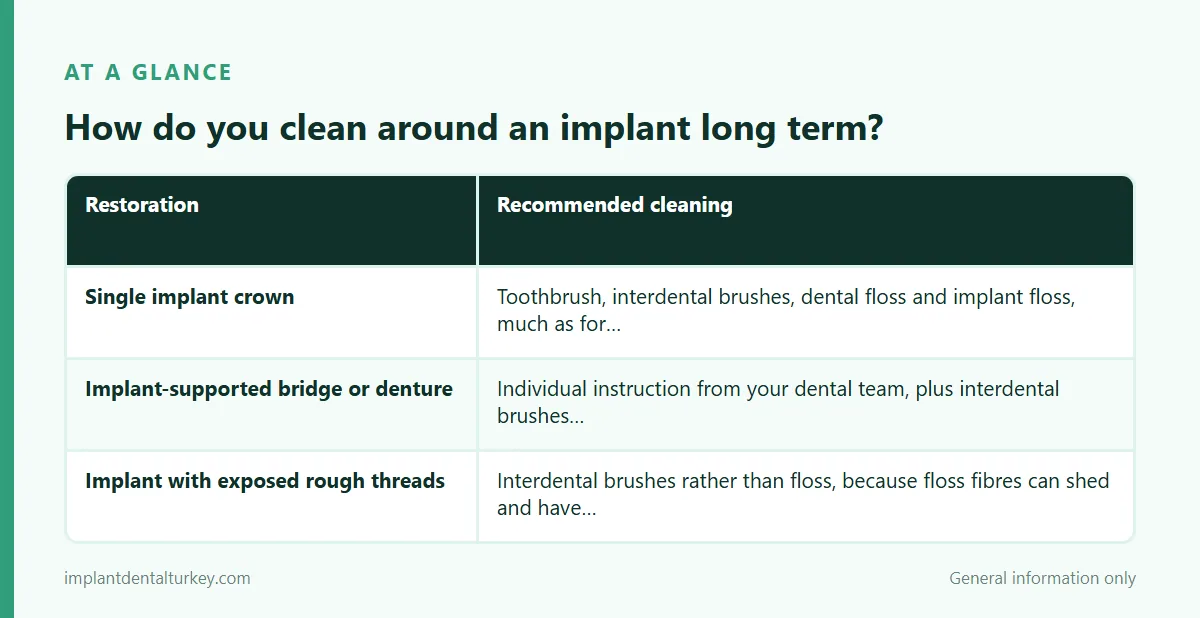
Once healed, an implant needs the same daily attention as natural teeth, with a few specifics. The Scottish Dental Clinical Effectiveness Programme (SDCEP) recommends the following tools depending on what sits on the implant:
| Restoration | Recommended cleaning |
|---|---|
| Single implant crown | Toothbrush, interdental brushes, dental floss and implant floss, much as for natural teeth |
| Implant-supported bridge or denture | Individual instruction from your dental team, plus interdental brushes, single-tufted brushes, floss and implant floss, and brushing where the restoration meets the gum |
| Implant with exposed rough threads | Interdental brushes rather than floss, because floss fibres can shed and have been linked to peri-implant disease |
SDCEP also advises flossing gently without forcing floss below the gum margin, choosing interdental brushes that fit snugly without the wire rubbing the implant parts (plastic-coated versions exist), and considering a rechargeable electric toothbrush if a manual brush is difficult to use well.
Do lifestyle habits affect implant healing?
Yes. Cleveland Clinic notes that smoking or vaping can disrupt healing after implant placement, and that some medicines for autoimmune conditions may raise the risk of complications during healing. If you smoke, ask your GP or Quitline about support before surgery rather than after. Tell your implant team about every medicine you take.
Aftercare is also where follow-up arrangements matter. Before treatment, confirm who will review the implant after placement and who you would see if something felt wrong months later. For background on the stages of treatment, see our step-by-step guide to implant treatment in New Zealand and how many visits implants usually need.
Sources
- Cleveland Clinic, Dental Implants
- Cleveland Clinic, What to Eat After Oral Surgery
- Scottish Dental Clinical Effectiveness Programme, Implant Oral Hygiene
This article is general information and is not a substitute for advice from your own dentist.