How Much Does Insurance Pay for Dental Work?

How Much Does Insurance Pay for Dental Work? Navigating the complexities of dental insurance can often feel like a puzzle, leaving many individuals wondering exactly how much their plan will cover for necessary treatments. Unlike medical insurance, dental coverage typically focuses more on prevention and shares costs with the patient for restorative and major procedures. Understanding the nuances of your specific dental insurance policy is crucial for managing your oral health expenses effectively and making informed decisions about your treatment options. This comprehensive guide will delve into the typical coverage percentages for various dental procedures, factors that influence reimbursement, and strategies to maximize your benefits.
Understanding Dental Insurance: The Essentials
Dental insurance is designed to help offset the costs associated with dental care. However, it’s important to recognize that most dental plans are not designed to cover 100% of all procedures, especially more extensive treatments. Instead, they typically cover a percentage of the cost after a deductible has been met, up to an annual maximum. Plans vary widely, but generally fall into categories such as Preferred Provider Organization (PPO), Dental Health Maintenance Organization (DHMO), indemnity plans, or discount plans. Each type has its own structure regarding network providers, referrals, and out-of-pocket costs.
Key Terms to Know: Deductible, Coinsurance, Annual Maximum
To fully grasp how much your insurance will pay, familiarity with these terms is essential:
- Deductible: This is the amount of money you must pay out of pocket before your dental insurance begins to pay for services. For example, if you have a $50 deductible, you pay the first $50 of your dental care, and then your insurance starts contributing. Many plans waive the deductible for preventive services.
- Coinsurance: After your deductible is met, coinsurance is the percentage of the cost of a covered service that you are responsible for paying. Your insurance plan pays the remaining percentage. For instance, if your plan covers a filling at 80%, you pay the remaining 20% coinsurance.
- Annual Maximum: This is the maximum dollar amount your dental insurance plan will pay for your dental care within a specific benefit period, usually a calendar year. Once this maximum is reached, you are responsible for 100% of any further dental costs until the next benefit period begins. Many plans have annual maximums ranging from $1,000 to $2,000.
- Waiting Period: Many dental insurance plans impose waiting periods, especially for major procedures. This is a period of time (e.g., 6 months, 12 months) that must pass after you enroll in the plan before certain procedures will be covered. Preventive care often has no waiting period.
How Much Does Insurance Pay for Dental Work?
The amount your insurance pays for dental work primarily depends on the type of procedure, the specific details of your plan, and whether you’ve met your deductible and annual maximum. Dental procedures are typically categorized into three main tiers for coverage purposes: preventive, basic, and major.
| Procedure Category | Examples of Services | Typical Insurance Coverage |
|---|---|---|
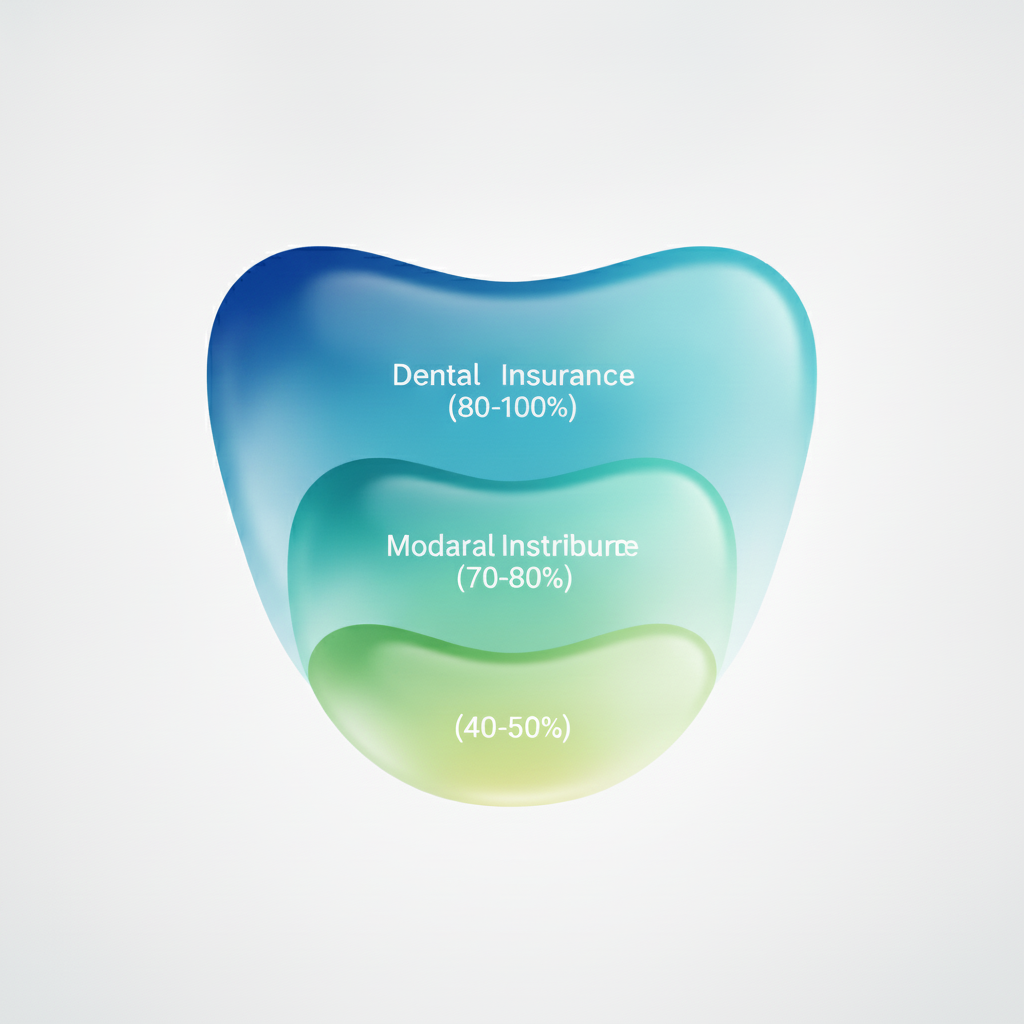
| Preventive Care | Cleanings, routine exams, X-rays, fluoride treatments | 80% – 100% |
| Basic Procedures | Fillings, simple extractions, root canals, periodontal scaling | 70% – 80% |
| Major Procedures | Crowns, bridges, dentures, dental implants, oral surgery | 40% – 50% |
| Orthodontics & Cosmetic | Braces, aligners, veneers, teeth whitening | Often limited or no coverage |
Coverage for Preventive Care, Basic, and Major Procedures
- Preventive Care: This is usually the most generously covered category, with many plans covering 80% to 100% of costs. Regular cleanings, comprehensive exams, and routine X-rays are crucial for maintaining oral health and preventing more serious issues. The high coverage for these services reflects the insurance industry’s recognition of their long-term cost-saving benefits.
- Basic Procedures: Services like fillings for cavities, routine tooth extractions, and root canal therapy generally fall into the basic category. For these, most insurance plans will cover between 70% and 80% of the cost after your deductible. The remaining 20-30% is your coinsurance responsibility.
- Major Procedures: This category includes more extensive and often more expensive treatments such as dental crowns, dental bridges, and dentures. For these, coverage typically drops to around 40% to 50%. This means you will be responsible for a larger portion of the cost. The technical complexity and material costs associated with major procedures contribute to their higher overall price and the lower insurance reimbursement percentage.
Understanding Dental Implants and Insurance Coverage
Dental implants are considered a highly effective and long-lasting solution for replacing missing teeth, offering superior stability and a natural look compared to traditional bridges or dentures. However, when it comes to insurance coverage for dental implants, the situation can be more varied and complex. Many plans categorize dental implants as a major procedure, meaning they might cover around 50% of the cost, similar to crowns or bridges, after your deductible has been met. Some older or more basic plans may not cover implants at all, viewing them as a cosmetic or experimental procedure, although this perspective is changing as implants become the standard of care.
The coverage can also depend on the specific components of the implant procedure. For example, the surgical placement of the implant post might be covered differently than the crown that goes on top. Sometimes, the extraction of a tooth prior to implant placement might be covered under basic services, while bone grafting or sinus lifts (if needed) might be covered under major or not at all. It is always recommended to get a pre-authorization from your insurance provider for dental implants to understand the exact coverage details and your out-of-pocket expenses. Dental clinics specializing in implants often have experience navigating these claims. Learn more about comprehensive dental implant solutions.
Factors Shaping Your Reimbursement: What to Consider
Several factors beyond the procedure type can significantly impact how much your dental insurance pays.
In-Network vs. Out-of-Network Providers
Most dental insurance plans have a network of preferred providers. If you visit a dentist who is “in-network,” your insurance company has a pre-negotiated rate with that provider, which often results in lower out-of-pocket costs for you. If you choose an “out-of-network” dentist, your plan might still offer some coverage, but it could be at a lower percentage, and you might be responsible for the difference between the dentist’s fee and what your insurance company deems as a “usual and customary” rate.
Waiting Periods and Pre-Existing Conditions
As mentioned, waiting periods can delay coverage for certain procedures. Additionally, some dental plans may have limitations or exclusions for pre-existing conditions. For example, if you already have a missing tooth before enrolling in a plan, the replacement of that tooth (e.g., with an implant or bridge) might not be covered for a certain period or at all, depending on the policy.
Cosmetic vs. Medically Necessary Treatments
Dental insurance typically focuses on covering procedures that are deemed medically necessary to restore health and function. Purely cosmetic procedures, such as teeth whitening, porcelain veneers for aesthetic reasons only, or certain orthodontic treatments primarily for appearance, often receive little to no coverage. However, if a procedure like a crown or an orthodontic treatment also serves a restorative or functional purpose, a portion of it might be covered.
Navigating Your Policy and Maximizing Benefits
Understanding your policy and working strategically can help you make the most of your dental insurance.
Decoding Your Summary of Benefits
Your insurance provider will supply a “Summary of Benefits” or “Explanation of Benefits” (EOB). This document outlines what your plan covers, your deductible, annual maximum, and coinsurance percentages for different types of services. Reading this thoroughly is your first step to understanding your coverage.
The Importance of Pre-Authorization
For major procedures, especially those with significant costs like dental implants, crowns, or extensive oral surgery, obtaining a pre-authorization (also known as a pre-determination or pre-treatment estimate) from your insurance company is highly recommended. Your dental office can submit a treatment plan to your insurer, who will then provide an estimate of what they will cover. This eliminates surprises regarding your out-of-pocket costs.
Strategies for Optimizing Your Annual Maximum
If you have extensive dental needs, consider spreading out major treatments over two benefit periods. For instance, if you need multiple crowns and would exceed your annual maximum in one year, you might have one crown placed late in the current year and the remaining ones early in the next, maximizing your benefits across two annual maximums. Regular preventive care also prevents the need for costly major procedures.
Working with Your Dental Clinic: Claims and Transparency

Your dental clinic plays a vital role in helping you understand and utilize your insurance benefits. Reputable clinics will assist you in submitting claims, understanding your policy, and providing detailed cost estimates. They can help you navigate pre-authorizations and clarify any questions you have about your coverage and what your financial responsibility will be. Transparent communication between you, your dentist, and your insurance provider is paramount for a smooth treatment experience.
Ultimately, the exact amount your insurance pays for dental work is a highly individualized figure, determined by your specific policy, the procedures you require, and the factors discussed above. While dental insurance can significantly reduce your financial burden, it’s essential to view it as a financial aid rather than complete coverage for all dental needs. By staying informed about your policy details and collaborating closely with your dental provider, you can make the most of your benefits and ensure continued access to high-quality dental care. For general information on dental insurance, you can refer to Wikipedia’s entry on Dental Insurance.