Emergency Dentist New Zealand: Where to Go for Urgent Dental Care

Emergency Dentist New Zealand: Where to Go for Urgent Dental Care and how to navigate the system when faced with a sudden dental crisis. A severe toothache, a knocked-out tooth from a sports injury, or sudden swelling can be incredibly distressing. Understanding what constitutes a dental emergency, what immediate steps to take, and where to find help is crucial for preserving your oral health and managing pain effectively. In New Zealand, accessing urgent dental care involves knowing the right channels, from your local clinic to specialised after-hours services and even hospital emergency rooms in critical situations. The key is to act quickly and decisively to prevent further complications.

Identifying a True Dental Emergency
Not every dental issue requires an immediate, middle-of-the-night visit to a clinic. It’s important to distinguish between a problem that is urgent and can wait until the next business day, and a true emergency that requires immediate medical attention. A genuine dental emergency typically involves conditions that are potentially life-threatening or require immediate action to save a tooth or stop severe pain.
Key indicators of a dental emergency include:
- Uncontrolled Bleeding: Bleeding from the mouth that does not stop after applying pressure for 10-15 minutes is a serious concern.
- Severe Pain: Pain that is unbearable and cannot be managed with over-the-counter medication signals a significant problem, such as an advanced infection.
- Signs of Infection (Abscess): A dental abscess is a pocket of pus caused by a bacterial infection. Symptoms can include a painful, pimple-like swelling on the gums, fever, a foul taste in the mouth, and facial swelling. If swelling spreads to the neck or affects your breathing or swallowing, it becomes a life-threatening situation requiring immediate hospital care.
- Knocked-Out (Avulsed) Tooth: A tooth that has been completely knocked out of its socket due to trauma requires immediate attention. There is a very short window, often less than an hour, in which the tooth can be successfully reimplanted.
- Significant Facial Trauma: Any injury to the jaw, face, or mouth that may indicate a fracture or dislocation needs to be evaluated in a hospital emergency department.
Issues like a lost filling, a minor chip on a tooth, or dull toothache are considered urgent but not typically emergencies. These can usually be addressed by scheduling a prompt appointment with your regular dentist during their normal operating hours.
Common Dental Emergencies and Immediate First Aid
When faced with a dental crisis, your actions in the first few minutes can make a substantial difference to the outcome. Knowing basic first aid can help manage symptoms and improve the chances of a successful treatment. Below is a breakdown of common emergencies and the recommended immediate steps to take while you seek professional help.
| Emergency Type | Key Symptoms | Immediate First Aid Action |
|---|---|---|
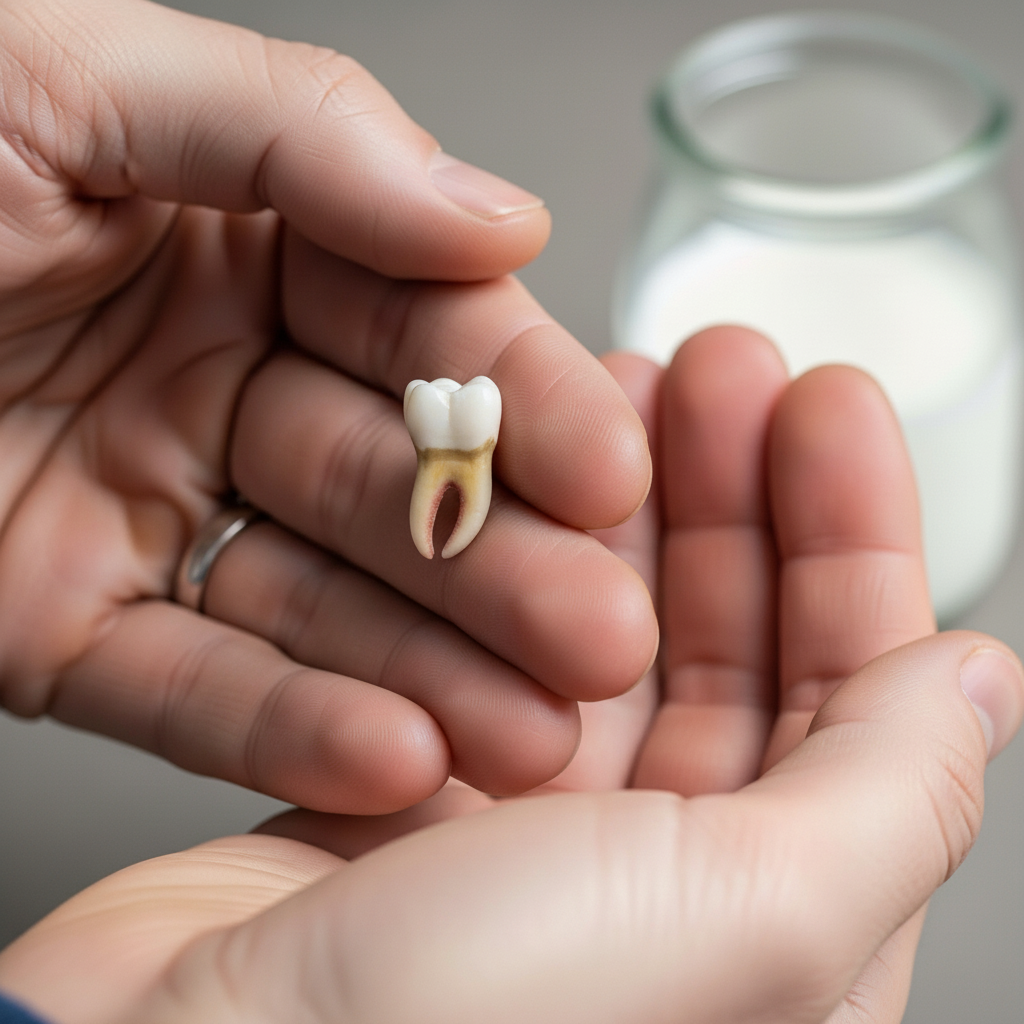
| Knocked-Out Tooth | A tooth completely dislodged from the socket due to trauma. | Pick up the tooth by the crown (the chewing surface), not the root. Gently rinse with water if dirty; do not scrub. Attempt to place it back in the socket. If not possible, store it in milk or saliva and see a dentist within 30-60 minutes. |
| Severe Toothache | Intense, persistent, throbbing pain. Sensitivity to temperature. | Rinse your mouth with warm salt water. Gently floss to remove any trapped food particles. Apply a cold compress to the outside of your cheek. Avoid placing aspirin directly on the tooth or gums. |
| Chipped or Broken Tooth | Visible fracture, sharp edges, pain when biting or chewing. | Rinse your mouth with warm water. If there is bleeding, apply gauze to the area. Use a cold compress on the exterior of the mouth or cheek to reduce swelling. Save any large broken pieces. |
| Dental Abscess | Severe pain, pus, pimple-like swelling on the gum, fever, facial swelling. | Rinse with mild salt water several times a day to help draw the pus to the surface and relieve pain. See a dentist immediately. Do not attempt to pop the abscess yourself. If swelling impacts breathing, go to a hospital. |
| Lost Filling or Crown | Noticeable hole in the tooth, sensitivity, discomfort. | Keep the area clean. If you have the crown, you can temporarily re-seat it using dental cement from a pharmacy, but this is not a permanent solution. See a dentist as soon as possible to prevent further damage or decay. |
What to do for a Knocked-Out Tooth
The protocol for a knocked-out permanent tooth is time-sensitive. The goal is to keep the periodontal ligament cells on the root surface alive. Handling the tooth by the crown prevents damage to these delicate cells. Rinsing with milk or a saline solution is ideal. If re-inserting it into the socket is possible, have the person gently bite down on a clean cloth to hold it in place. If not, placing it in a container of milk is the best alternative. Water is not recommended for long-term storage as it can cause the root cells to swell and burst.
Managing an Abscess
A dental abscess is a serious infection that can spread to other parts of the body. While rinsing with salt water can provide temporary relief, it does not treat the underlying infection. A dentist must drain the abscess and will likely prescribe antibiotics. Delaying treatment can lead to severe complications, including sepsis, which is a life-threatening condition. A comprehensive overview of dental emergency management highlights the critical nature of such infections.
Finding an Emergency Dentist New Zealand
When an emergency strikes, knowing where to turn is half the battle. In New Zealand, several avenues are available for urgent dental care.
- Your Regular Dentist: If the emergency occurs during business hours, your first call should be to your regular dental clinic. Most clinics reserve time in their schedules for emergency appointments and will be able to see you promptly.
- After-Hours Emergency Clinics: Major cities like Auckland, Wellington, and Christchurch have dedicated after-hours emergency dental clinics. These facilities are specifically equipped to handle urgent cases outside of normal working hours, including evenings, weekends, and public holidays. A quick search online for “after-hours dentist” in your area will provide the best options.
- Hospital Emergency Departments: For severe trauma, such as a broken jaw, or for infections causing facial swelling that affects breathing or swallowing, the hospital emergency department is the most appropriate place. While they may not have a dentist on staff 24/7, medical doctors can manage pain, administer antibiotics for infections, and address significant trauma. They can then refer you to a dental specialist for follow-up care.
In rural areas, options may be more limited. Your local hospital might be the primary point of contact, or you may need to travel to the nearest large town for an on-call dentist. It is wise to research and have the contact information for your local emergency dental service on hand before you actually need it.
The Financial Reality and Long-Term Solutions
Urgent dental care in New Zealand can be expensive, particularly for after-hours services which often come with a significant call-out fee on top of the treatment cost. While the Accident Compensation Corporation (ACC) can help cover the costs of dental injuries caused by an accident, it does not cover issues arising from decay, infection, or general wear and tear. This leaves patients to cover the full cost of emergency treatment for conditions like an abscess or a severe toothache.
An emergency often exposes the need for more extensive, long-term dental work. For example, a tooth that cannot be saved may require a dental implant, and a severely fractured tooth might need a crown or a root canal. The cost for these restorative procedures in New Zealand can be substantial, running into thousands of dollars. This financial barrier can be a source of major stress following an already painful emergency. Faced with these high costs, many individuals explore alternative solutions. For those requiring significant restorative work, understanding why Kiwis fly to Turkey for new teeth provides insight into a growing trend. Dental tourism offers access to high-quality treatments like full mouth dental implants, crowns, and bridges at a fraction of the domestic cost. While not a solution for the immediate emergency itself, it presents a viable and affordable pathway for the comprehensive, long-term restorative care that is often necessary afterwards. Planning this follow-up care in a top-tier clinic abroad can transform a costly dental crisis into an opportunity for a complete and lasting oral health restoration.