How Long Will Dental Implants Last? Post, Crown and Gums
Why the post, crown and surrounding gum wear differently, and what helps implants last.
Edited and fact-checked by our editorial team.

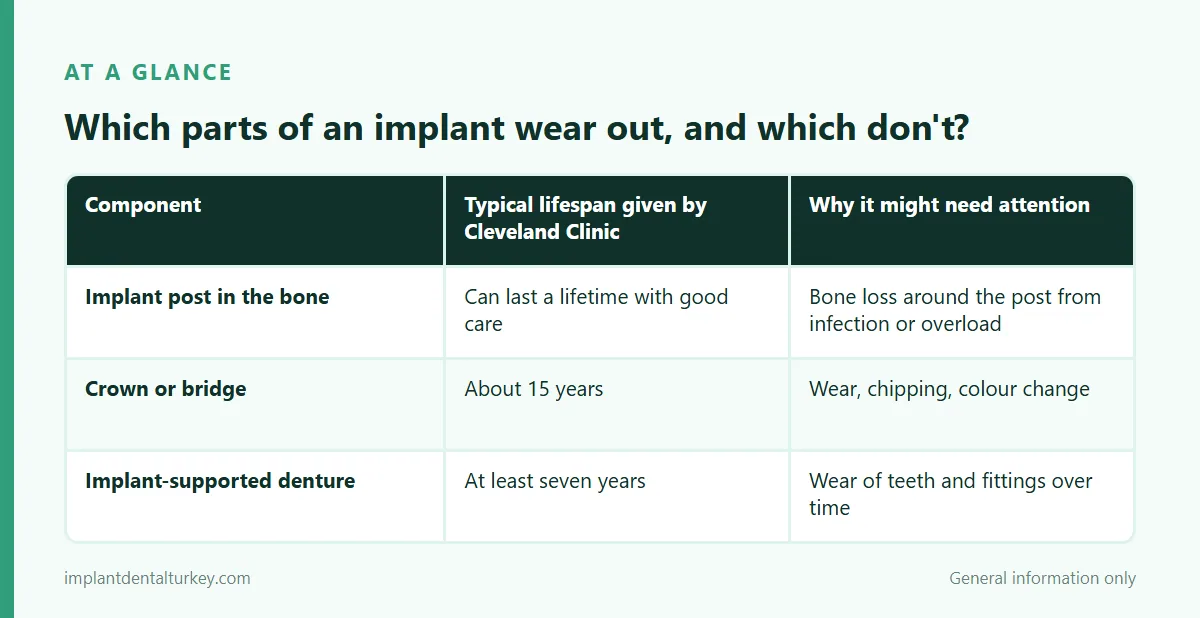
How long will dental implants last? Cleveland Clinic says the implant post itself can last a lifetime with good oral hygiene and regular dental visits, while the crown or bridge on top typically lasts around 15 years and an implant-supported denture at least seven, before it may need replacing.
That headline answer hides an important detail: an implant is a system, and its parts wear at different rates. The biggest long-term threat is usually not the titanium breaking but the gum and bone around it becoming inflamed. Below we look at what affects lifespan, which parts tend to be replaced, and what Kiwis can do to protect what is often a significant investment.
Which parts of an implant wear out, and which don’t?
| Component | Typical lifespan given by Cleveland Clinic | Why it might need attention |
|---|---|---|
| Implant post in the bone | Can last a lifetime with good care | Bone loss around the post from infection or overload |
| Crown or bridge | About 15 years | Wear, chipping, colour change |
| Implant-supported denture | At least seven years | Wear of teeth and fittings over time |
Cleveland Clinic notes these figures vary from person to person. Because the crown or denture can be replaced while the post stays in the bone, protecting the gum and bone around the post is what matters most for the long term.
What is peri-implantitis and why does it matter?
Peri-implantitis is an inflammatory condition around an implant that leads to loss of the supporting bone. A 2024 review in the journal Dentistry Journal describes signs such as bleeding when the area is probed, pus, deepening pockets around the implant and bone loss visible on X-rays. In advanced cases, the implant can loosen.
The same review reports that the condition tends to show up after implants have been in use for some years, rather than straight after treatment. That is why long-term maintenance, not just a successful placement, decides how long an implant lasts.
What raises the risk of an implant failing early?
The Dentistry Journal review lists a range of risk factors linked to peri-implantitis, including:
- Smoking
- A history of gum disease (periodontitis)
- Poor plaque control around the implant
- Uncontrolled diabetes
- Excess cement left around the crown after it is fitted
- Implant position and heavy bite forces
Cleveland Clinic adds that smoking or vaping can disrupt healing after placement, and some medicines for autoimmune conditions may increase the risk of complications. If any of these apply to you, raise them at your assessment so the plan accounts for them.
How can you help dental implants last longer?
- Clean around the implant every day. The Scottish Dental Clinical Effectiveness Programme (SDCEP) advises cleaning a single implant crown much like a natural tooth, with a toothbrush, interdental brushes and floss. Bridges and implant dentures need individual instruction from your dental team.
- Use the right tools. SDCEP recommends interdental brushes rather than floss where rough implant threads are exposed, because floss fibres can catch and have been linked to peri-implant disease.
- Keep up maintenance visits. The Dentistry Journal review recommends regular professional maintenance with checks of the tissues around the implant. Your dentist will set an interval for you.
- Stop smoking and keep conditions such as diabetes well managed with your GP.
- Act on early signs. Cleveland Clinic advises contacting your dentist if an implant feels loose or you notice bleeding or swollen gums, pus, fever or swollen glands in the neck.
Does where you have treatment affect longevity?
Lifespan depends on planning, placement and maintenance, so it is worth knowing in advance who will look after your implants over the long term. If you are comparing clinics, our guide to choosing the right dentist in New Zealand covers questions to ask, and our step-by-step guide to the implant procedure in NZ explains each stage. Ask any provider which implant system they use and whether replacement parts will be easy for a local dentist to source years from now.
Sources
- Cleveland Clinic, Dental Implants
- Ting M, Suzuki JB. Peri-Implantitis. Dentistry Journal, 2024
- Scottish Dental Clinical Effectiveness Programme, Implant Oral Hygiene
This article is general information and is not a substitute for advice from your own dentist.