How Long to Eat Soft Foods After a Dental Implant
A practical eating timeline after implant surgery, with foods to choose and avoid.
Edited and fact-checked by our editorial team.

How long to eat soft foods after a dental implant depends on your procedure, but Cleveland Clinic’s oral surgery guidance suggests soft foods for two to three days, then slowly adding more solid foods. After a bone graft, your surgeon may advise care for longer.
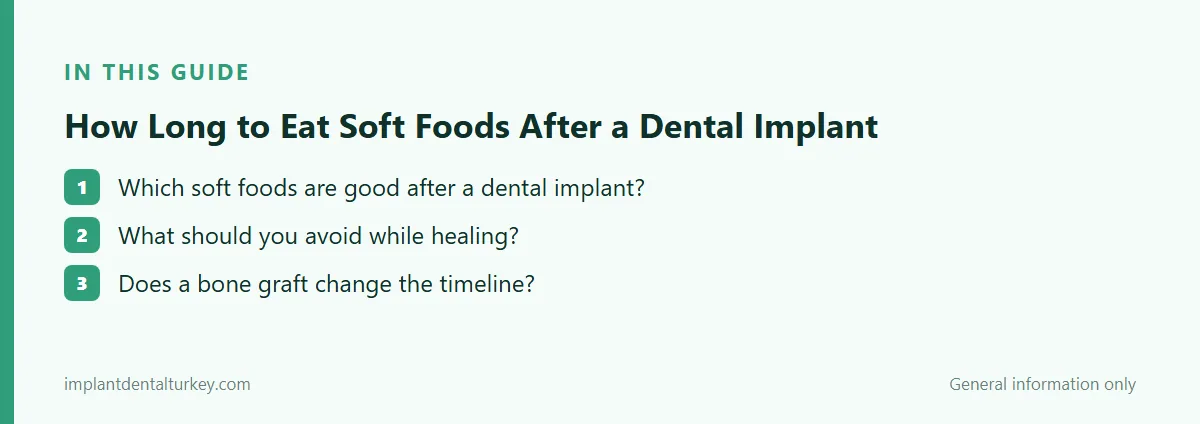
Eating well matters for healing, but chewing on a fresh surgical site is uncomfortable and can disturb it. Here’s a practical food timeline, a list of easy options, and the foods worth avoiding for a while.
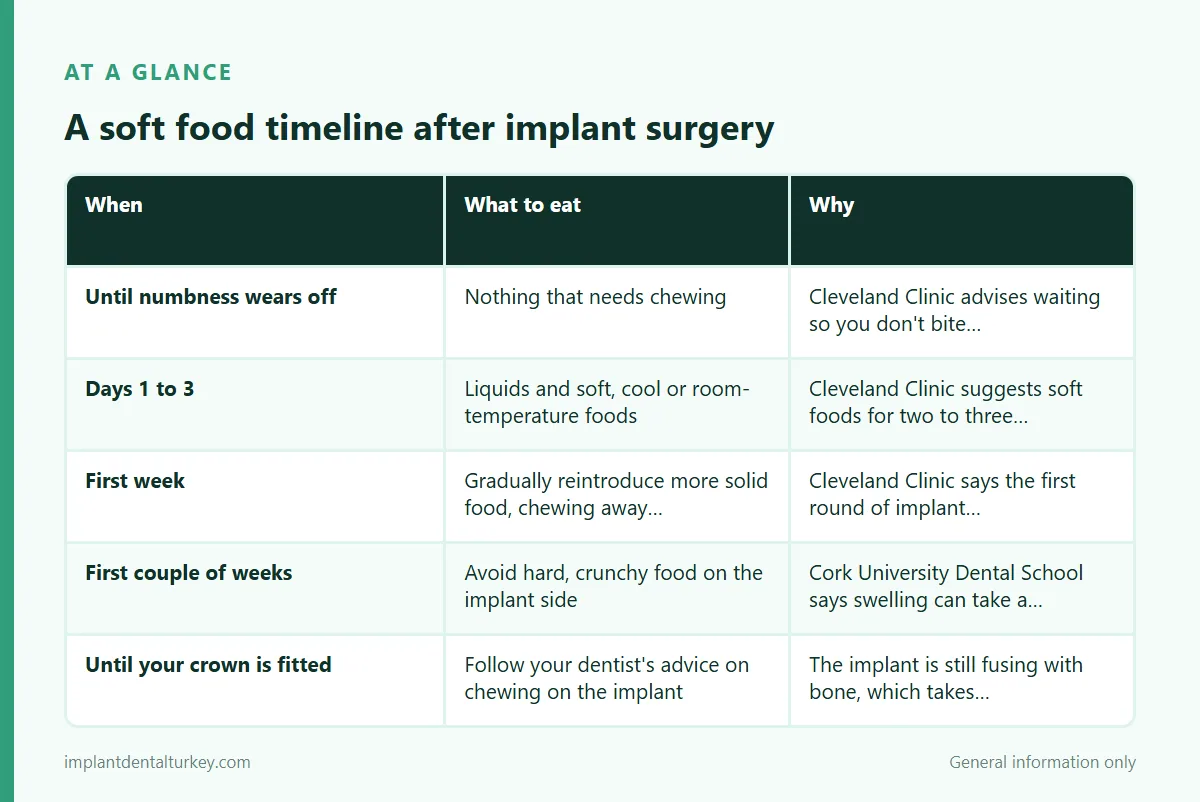
A soft food timeline after implant surgery
| When | What to eat | Why |
|---|---|---|
| Until numbness wears off | Nothing that needs chewing | Cleveland Clinic advises waiting so you don’t bite numb tissue |
| Days 1 to 3 | Liquids and soft, cool or room-temperature foods | Cleveland Clinic suggests soft foods for two to three days |
| First week | Gradually reintroduce more solid food, chewing away from the implant | Cleveland Clinic says the first round of implant healing takes about a week |
| First couple of weeks | Avoid hard, crunchy food on the implant side | Cork University Dental School says swelling can take a couple of weeks to settle |
| Until your crown is fitted | Follow your dentist’s advice on chewing on the implant | The implant is still fusing with bone, which takes three to nine months |
Which soft foods are good after a dental implant?
Cleveland Clinic lists a range of liquids and soft foods that reduce chewing:
- yoghurt, smoothies, milkshakes or protein shakes (without a straw);
- scrambled eggs, mashed potato, cooked pasta and rice;
- soft fruit such as bananas, berries, watermelon and peaches;
- apple sauce, pudding, jelly, ice cream or sorbet;
- foods that are pureed, mashed or cut into small pieces.
Cleveland Clinic stresses keeping your diet nutritious rather than living on ice cream, and suggests including vegetables, healthy fats, lean meat, fish, eggs, greens and whole grains as you progress.
What should you avoid while healing?
- Hard or crunchy foods: nuts, chips, crackers and biscuits, especially those with seeds.
- Spicy and acidic foods: hot sauce, salsa, orange or tomato juice, lemonade and vinegar.
- Very hot food and drink: Cleveland Clinic advises lukewarm or room-temperature tea, coffee and soup, to avoid disrupting the blood clot.
- Straws: suction can disturb the clot.
- Alcohol: Cleveland Clinic says it can slow healing and interact with pain relief and antibiotics.
- Smoking: it narrows blood vessels and impairs healing.
Does a bone graft change the timeline?
It can. Cleveland Clinic’s bone graft aftercare includes eating soft foods, avoiding alcohol for at least two weeks, and avoiding vigorous spitting or swishing. The graft itself needs at least three months to heal. Ask your surgeon how long to stay on soft foods if a graft or sinus lift was part of your treatment. Our article on how long dental implants take in NZ sets out the full timeline.
Tips for eating comfortably
- Chew on the side away from the implant.
- Rinse gently after eating; Cork University Dental School suggests the recommended mouthwash, or warm salt water from the day after surgery.
- Prepare soft meals before surgery so you’re not tempted by takeaways.
- Stop and go back to softer food if chewing becomes painful, as Cleveland Clinic advises listening to your body.
- Call your dentist if pain or swelling worsens after the first few days, or if you notice pus or fever.
If you wear a denture over the area, Cork University Dental School notes it may not fit as well after surgery; ask your dentist how to manage it. For general recovery information, see our implant procedure guide.
Sources
- Cleveland Clinic, What to Eat After Oral Surgery
- Cleveland Clinic, Dental Implants
- Cleveland Clinic, Dental Bone Graft
- Cork University Dental School and Hospital, Patient Information Leaflet: Implant Surgery
This article is general information and is not a substitute for advice from your own dentist.