Dental Implants Overseas: What Kiwis Should Check First
Official NZ advice on insurance, risks, clinic questions and follow-up care for implants abroad.
Edited and fact-checked by our editorial team.
Before getting dental implants overseas, New Zealand’s SafeTravel advice is to research the clinic and practitioner, talk to your own dentist, buy insurance that covers the procedure and plan follow-up care at home, as basic travel policies rarely cover medical tourism.
Implants are a particularly demanding treatment to have abroad. They usually involve surgery, a healing period of months and a second stage to fit the final teeth, so the trip is only part of the story. This article focuses on the practical questions Kiwis should settle before booking, using guidance from SafeTravel, the official advice site for New Zealanders travelling overseas, and the New Zealand health information site Healthify.
What does the New Zealand government advise about treatment abroad?
SafeTravel’s medical tourism advice applies to medical, cosmetic and dental treatment overseas. Its checklist before you go includes:
- Researching the destination, the hospital or clinic, and the practitioner, including their qualifications and accreditations.
- Discussing the procedure and its risks with your own New Zealand health practitioner, and getting a health check.
- Understanding the full cost, including extra care if complications extend your stay.
- Arranging someone to travel with you who can support you and help make decisions.
- Getting an insurance policy designed for your specific procedure.
- Carrying copies of your medical records and test results, and telling staff about allergies.
Will insurance or ACC cover problems?
This is where many plans fall short. SafeTravel states that basic travel insurance policies rarely cover medical tourism, and that you should make sure your policy covers complications and medical evacuation. It also says plainly that you are responsible for the cost of your treatment and for costs incurred if something goes wrong.
On ACC, SafeTravel’s illness and injury guidance says ACC does not cover treatment overseas. Healthify adds that follow-up care is unlikely to be funded when you are home, and suggests setting money aside for it. Before you go, ask your insurer in writing what is and is not covered, and budget for follow-up visits with a local dentist.
What risks are specific to having surgery abroad?
Healthify identifies infection as the most common complication of medical tourism, noting that infection-control standards vary. Other risks it lists include bleeding, blood clots, wound problems, substandard medicines or devices, language barriers and a lack of follow-up care. SafeTravel adds that flying after surgery may increase the risk of deep vein thrombosis, and that problems can appear well after you return home, so get advice from a health practitioner about when it is safe to fly.
For implants, the “after you return” point is especially relevant. Cleveland Clinic notes that the bone typically takes about three to nine months to fuse with an implant before the final crown is attached, which means you may be managing healing, or making a second trip, long after the first appointment.
Which questions should you ask an overseas clinic?
Healthify recommends getting written answers before you commit. Adapted to implant treatment:
- The facility: Is it accredited by a trusted authority, and what are its infection control policies?
- The practitioners: What are the surgeon’s qualifications and experience? Will that person do the surgery? Do they hold malpractice or indemnity insurance? Can you meet them beforehand?
- The procedure: What are the risks? Which implant system and materials will be used? Are documents available in English?
- Aftercare: What is the written plan for follow-up and for care once you are home? When is it safe to fly?
- Cost: What is the full cost, and could estimates rise after treatment?
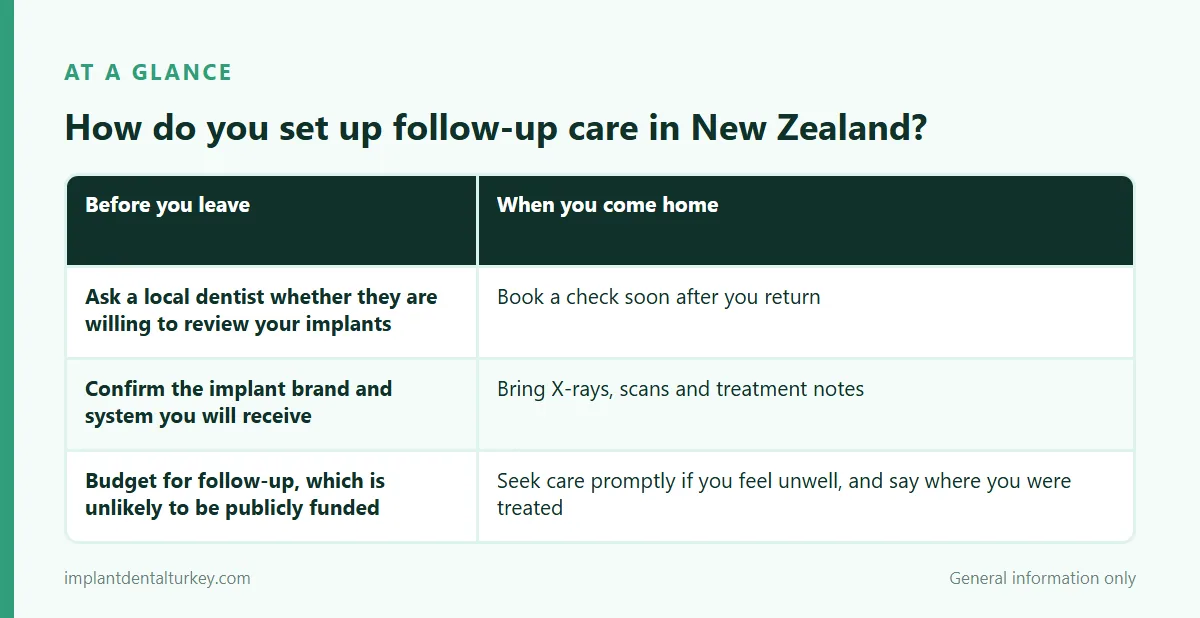
How do you set up follow-up care in New Zealand?
SafeTravel advises sharing the full details of your treatment with your New Zealand health practitioner and discussing what follow-up care you may need. In practice, that means:
| Before you leave | When you come home |
|---|---|
| Ask a local dentist whether they are willing to review your implants | Book a check soon after you return |
| Confirm the implant brand and system you will receive | Bring X-rays, scans and treatment notes |
| Budget for follow-up, which is unlikely to be publicly funded | Seek care promptly if you feel unwell, and say where you were treated |
If you are comparing destinations, our articles on picking a dentist in Turkey from NZ and Turkey versus Thailand for implants go into the specifics.
Sources
- SafeTravel, Medical tourism
- SafeTravel, You’re sick or injured
- Healthify, Medical tourism
- Cleveland Clinic, Dental Implants
This article is general information and is not a substitute for advice from your own dentist.