
Tooth eruption chart: baby teeth by age
This tooth eruption chart shows, for your child's age, which baby teeth often come in or fall out, with typical ranges for all 20 baby teeth.
- Free
- No registration
- Your entries stay in your browser
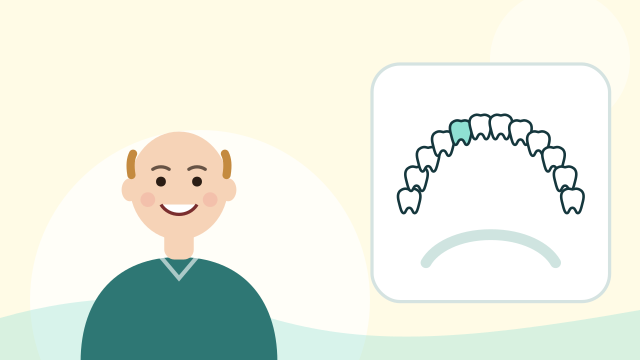
How it works
- Enter your child's ageType the years into “Child's age: years” and, if you like, the extra months into “and months”. For a baby, you can enter months only.
- Show the resultClick “Show”. The chart groups the baby teeth into “Often coming in at this age”, “Often falling out at this age”, “Usually already in”, “Usually not in yet” and “Usually already lost”.
- Read the tooth numbersEach tooth appears as a two-digit FDI number. The first digit is the quadrant (5 upper right, 6 upper left, 7 lower left, 8 lower right) and the second counts from the middle, so 71 is a lower front tooth.
- Check the full tableBelow the result, the table “Typical ages (the same on both sides)” lists each “Tooth” with the range in which it usually “Comes in” (months) and “Falls out” (years).
20Number of baby (primary) teeth; they start to come in at about 6 months of age Source
6 to 10 monthsWhen the bottom front teeth usually come through; the top front teeth follow at 8 to 12 months Source
6 to 7 yearsWhen the first permanent molars usually come in, behind the baby teeth Source
Free until 18Oral health care is free for all tamariki until they turn 18 Source
How to read this tooth eruption chart
Children have 20 baby teeth. The American Dental Association says they start to come in, or erupt, at about 6 months of age and fall out at various times throughout childhood. This tooth eruption chart uses the typical ranges from the ADA eruption charts. Enter your child's age, and the tool sorts every baby tooth into groups: often coming in at this age, often falling out at this age, usually already in, usually not in yet and usually already lost.
The ranges are typical, not rules. Many children fall outside them and nothing is wrong. The chart cannot tell you whether your child's teeth are early or late, and it is not a check-up. If you are worried about how your child's teeth are coming through, ask your child's dentist or dental therapist at the community oral health service. They can look at your child's mouth and explain what they see.
When baby teeth usually come through
KidsHealth, New Zealand's child health information site, gives the same order as the ADA chart. The bottom front teeth come through at 6 to 10 months and the top front teeth at 8 to 12 months. Then come the top teeth on either side at 9 to 13 months and the bottom ones at 10 to 16 months. The first top molars arrive at 13 to 19 months and the first bottom molars at 14 to 18 months.
The canines follow, with the top canines at 16 to 22 months and the bottom canines at 17 to 23 months. The last bottom molars come through at 23 to 31 months, and the last top molars at 25 to 33 months. In the chart, each tooth is shown with its FDI number: quadrants 5 to 8 are baby teeth, and the second digit counts from the middle, 1 for the central incisor to 5 for the second molar.
- Bottom front teeth: 6 to 10 months
- Top front teeth: 8 to 12 months
- First molars: 13 to 19 months
- Canines: 16 to 23 months
- Second molars: 23 to 33 months
Losing baby teeth and caring for new ones
The NZ Dental Association calls the years when baby teeth begin to fall out the mixed dentition. The first permanent molars usually come in between 6 and 7 years of age, behind the baby teeth, and do not replace any of them. The NZDA says the last baby teeth are lost only around 12 years of age. By age 21, the ADA says, all 32 permanent teeth have usually come through. The table under the tool shows typical ages for each baby tooth falling out.
In New Zealand, oral health care is free for all tamariki until they turn 18. KidsHealth advises enrolling your baby with the community oral health service as early as possible so you can arrange the first check-up. Call Talk Teeth on 0800 825 583 to find out how to enrol. KidsHealth also recommends brushing twice a day with a small, soft brush and a half-pea size amount of regular-strength fluoride toothpaste.
Frequently asked questions
How many baby teeth do children have?
Children have 20 baby teeth, also called primary teeth. The American Dental Association says they start to come in at about 6 months of age. Later they are replaced by permanent teeth, and by age 21 all 32 permanent teeth have usually come through.
When do babies get their first tooth?
KidsHealth says the bottom front teeth come through at 6 to 10 months, and the top front teeth at 8 to 12 months. Some babies are earlier or later. If you are worried, ask your child's dental therapist or dentist.
In what order do baby teeth come in?
Usually the bottom front teeth first, then the top front teeth, then the teeth on either side, the first molars, the canines and finally the second molars. KidsHealth gives 23 to 33 months for the last molars. Enter your child's age in the chart to see where they are likely to be.
When do children start losing baby teeth?
The ADA says baby teeth fall out at various times throughout childhood, and the NZ Dental Association says the last ones are often lost only around 12 years of age. The table “Typical ages (the same on both sides)” in the tool shows the usual range for each tooth under “Falls out”.
What are the 6-year molars?
The first permanent molars usually come in between 6 and 7 years of age, according to the NZ Dental Association. They come in behind the baby teeth and do not replace any of them. They are permanent teeth, so ask your child's dental therapist how best to keep them clean.
What do the tooth numbers in the chart mean?
The chart uses the FDI two-digit system. For baby teeth the first digit is the quadrant: 5 upper right, 6 upper left, 7 lower left and 8 lower right. The second digit counts from the middle, 1 to 5. So 51 is the upper right central incisor and 85 the lower right second molar.
My child's teeth are later than the chart. Is that a problem?
The chart shows typical ranges only, and many children fall outside them without anything being wrong. It cannot diagnose anything. If you are worried, ask your child's dentist or dental therapist at the community oral health service.
Is dental care free for children in New Zealand?
Yes. KidsHealth says oral health care is free for all tamariki until they turn 18, and Health NZ says eligible teens get free dental care every year until their 18th birthday. Some treatments, such as orthodontics, are not free. Call Talk Teeth on 0800 825 583 to enrol.
How should I brush my baby's teeth?
KidsHealth recommends a small, soft brush and a half-pea size amount of regular-strength fluoride toothpaste, twice a day. Enrol your baby with the community oral health service as early as possible so you can arrange the first check-up.
Sources
- ADA MouthHealthy: Eruption charts
- KidsHealth NZ: Caring for your baby's teeth
- NZ Dental Association: Mixed dentition
- Health New Zealand: Dentists (free care for under-18s, Talk Teeth)
- American Dental Association: Universal Tooth Designation System value set (with ISO 3950 mapping)
This tool provides general information and calculates only with the values you enter. It does not replace an examination or advice from a dentist, your health insurer or a financial adviser.
More free tools
 Braces costCompare a clear aligner quote with a fixed braces quote, including retainers and cost per month.
 Dental filling costAdd up the fillings on your quote, subtract insurance or a grant and see what you pay.
 WINZ dental grantSee how much of your dental quote the Work and Income grant could cover and what may be left to pay.
